
ELECTRICITY · CHAPTER 6 OF 13
What actually moves through a wire?
A bulb lights almost immediately—but that does not mean one electron races all the way from the battery to the bulb.
By the end, you’ll be able to…
- Describe how electrons move through a metal wire.
- Explain the difference between the electrons’ random motion and their overall drift when a current flows.
- Distinguish between electron flow and conventional current.
The wire is already full of electrons
Metals contain a regular arrangement of positive ions. Some outer electrons are delocalised: they are not attached to one particular atom and can move through the metal.
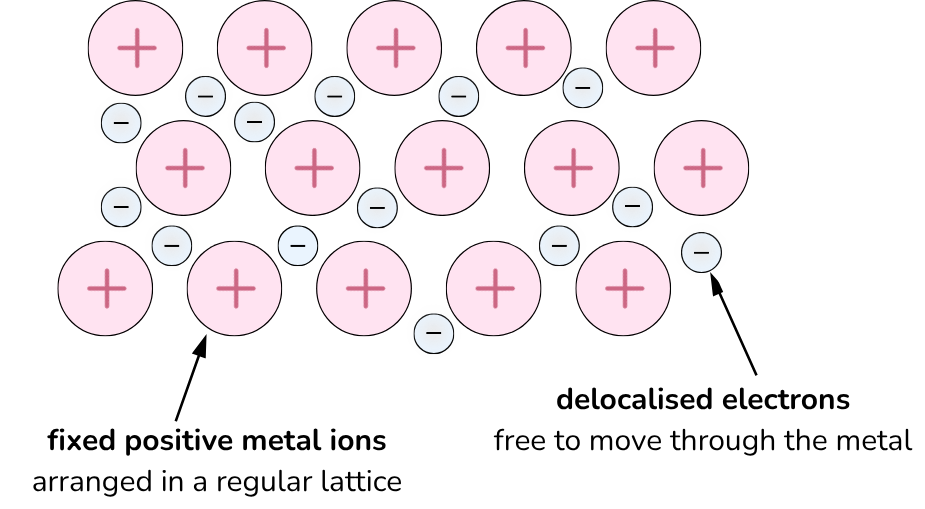
Positive metal ions
Held in fixed positions in the metal lattice. They vibrate, but they do not travel around the circuit.
Delocalised electrons
Already present throughout every metal wire. These mobile negative charges can drift through the circuit.
What does the cell do?
The wire already contains mobile electrons. The cell does not supply these electrons. Instead, it provides a potential difference that establishes an electric field in the complete circuit. This field exerts a force on the electrons, giving them an overall drift through the wire.
Two types of motion: random motion and drift
01 — Switch open: random motion only
Electrons move randomly in many directions. Their movements balance, so there is no overall flow of charge and no current.
02 — Switch closed: random motion plus drift
Electrons continue moving randomly, but the electric field gives them a small overall drift in one direction. This net movement of charge produces current.
So why does the bulb light quickly?
A push is passed around the circuit.
When the switch closes, an electric field is established around the complete circuit very quickly. Electrons everywhere in the wire begin to drift. The bulb does not wait for one electron to travel from the battery.
☆ The electrical effect spreads rapidly around the whole circuit when the switch is closed, even though the electrons’ average drift speed is much slower.
Imagine a tube already packed with beads
Push one bead into one end and a bead at the other end moves almost immediately. The push travels through the system even though each individual bead moves only a small distance.
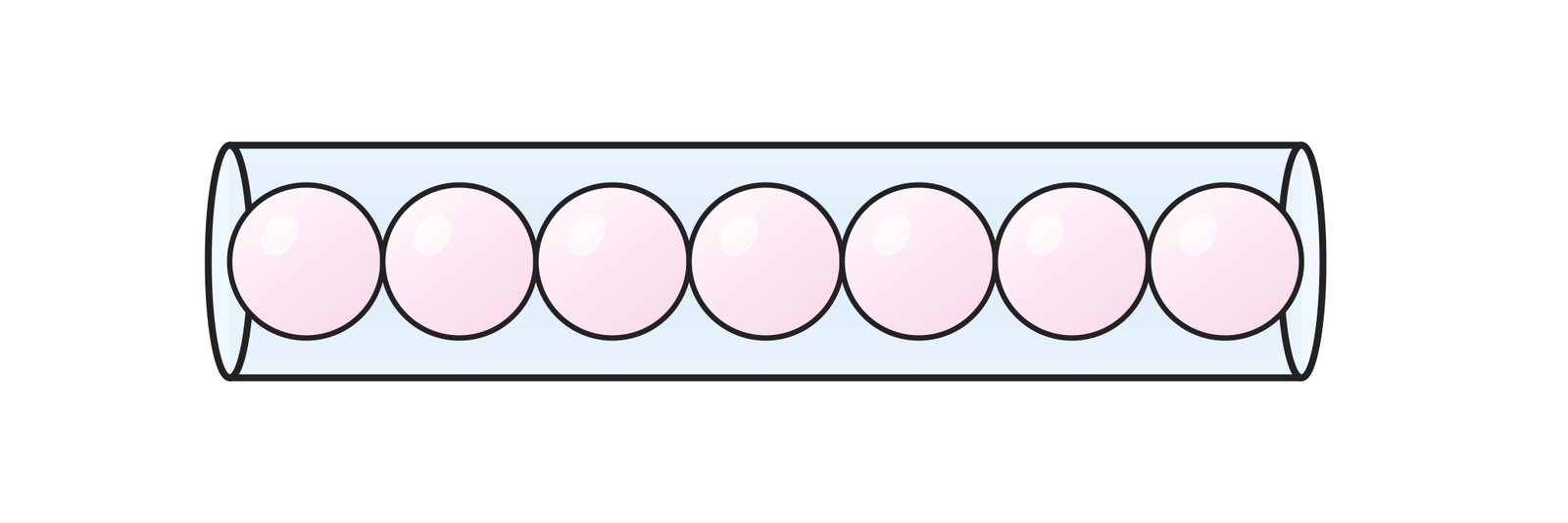
The tube is already full
The beads are touching, just as a metal wire already contains many free electrons.
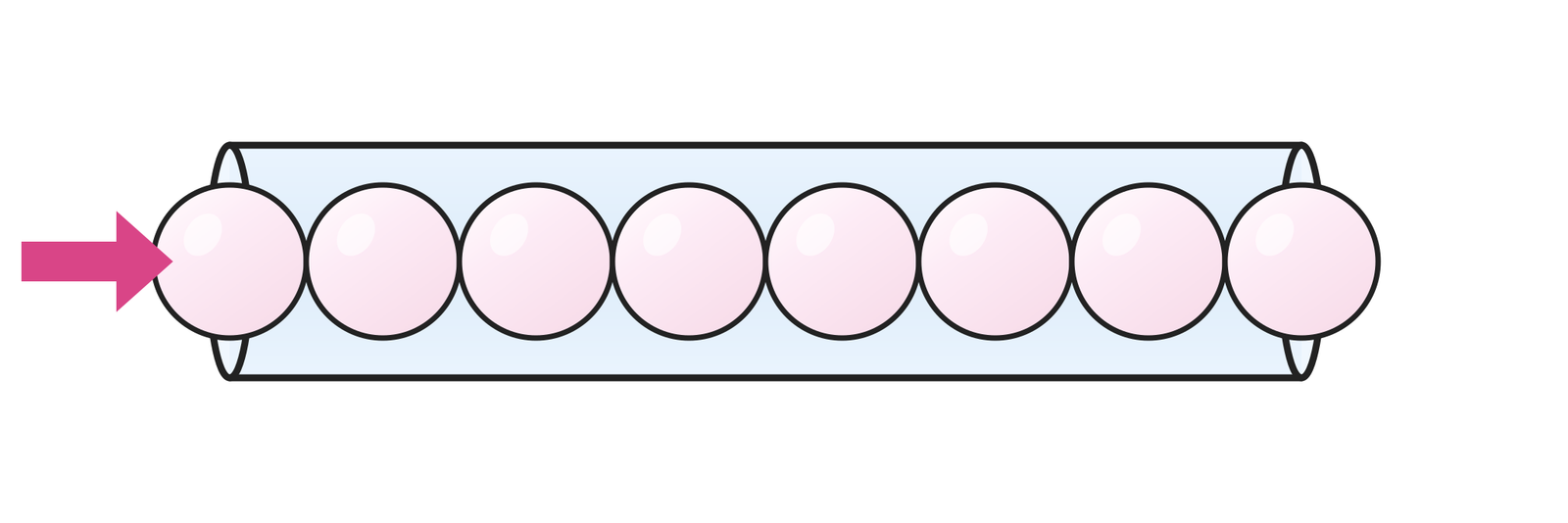
One bead is pushed in
The push is transferred from bead to bead through the full tube.
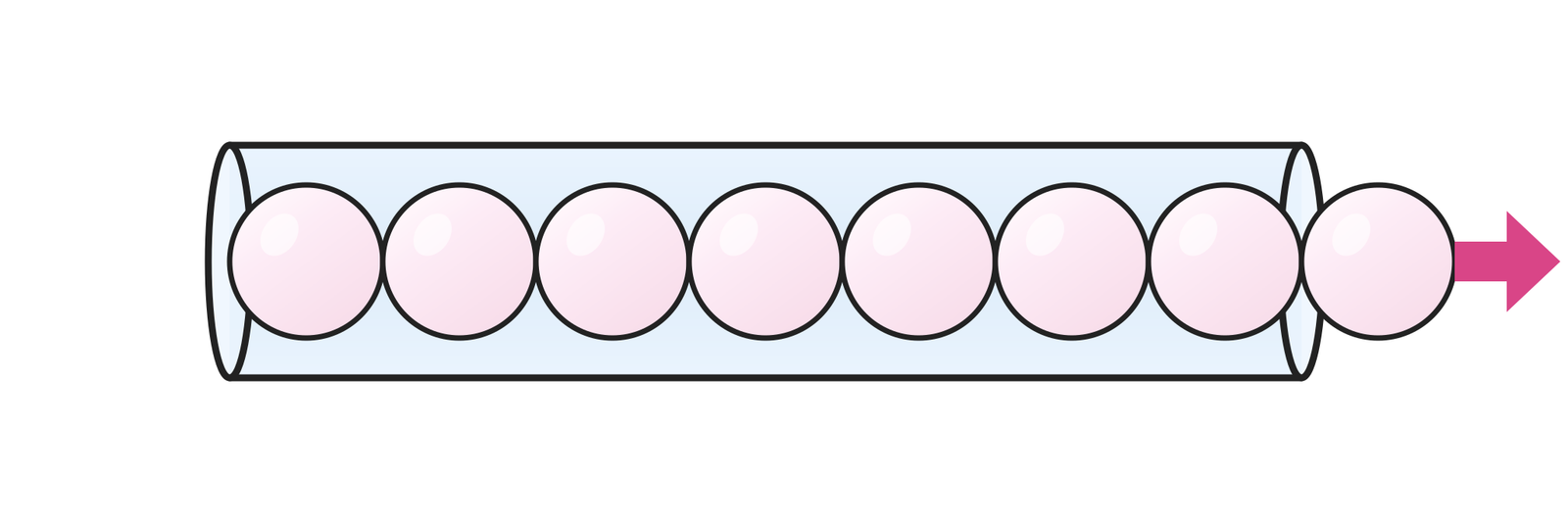
Another bead moves out
A different bead leaves the opposite end. The original bead has not travelled through the whole tube.
* An analogy helps us picture the idea, but electrons are not solid beads touching one another. The model helps us understand why the electrical effect can spread quickly even though individual electrons drift slowly.
Two directions—but only one is normally used on circuit diagrams
Electron flow
In metal wires, negatively charged electrons drift from the negative terminal towards the positive terminal.
Conventional current
Conventional current is shown from the positive terminal towards the negative terminal. This is the direction used for current arrows on circuit diagrams and in most GCSE questions.
Remember
In a metal wire, electron flow and conventional current point in opposite directions. Unless a question specifically asks about electrons, use the direction of conventional current.
Conventional current was defined before electrons were discovered, and scientists have continued to use the original convention.
Check your understanding
Test what you know about the particles inside a metal wire, electron drift and conventional current.
A student says, “When you close a switch, electrons leave the cell and travel around the circuit to the bulb.” Explain why this description is not correct.
The electrons are already present throughout the metal wires. The cell does not supply these electrons. When the switch is closed, an electric field is established around the complete circuit. This gives the electrons already in the wires a small overall drift from the negative terminal towards the positive terminal, opposite to the direction of conventional current.
CHAPTER 6
Chapter summary
- Metal wires contain fixed positive ions and mobile delocalised electrons.
- With the switch open, the electrons move randomly, but there is no overall flow of charge.
- Closing the switch establishes an electric field and gives the electrons a small overall drift.
- Electron flow is from the negative terminal towards the positive terminal, opposite to conventional current.
- The electrical effect spreads around the circuit much faster than an individual electron drifts through the wire.