
ELECTRICITY · CHAPTER 13 OF 13
Domestic Electricity and Safety
Electricity powers our homes, but it must be supplied and used safely to protect people and appliances.
By the end, you’ll be able to…
- Describe the features of the UK mains electricity supply.
- Explain the roles of the live, neutral and earth wires.
- Explain how fuses, circuit breakers and earthing protect people and appliances.
The UK mains supply
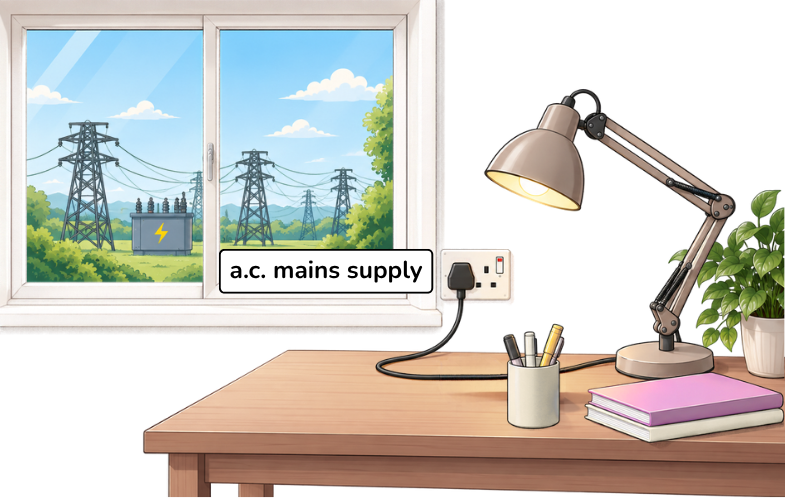
Mains electricity is alternating current
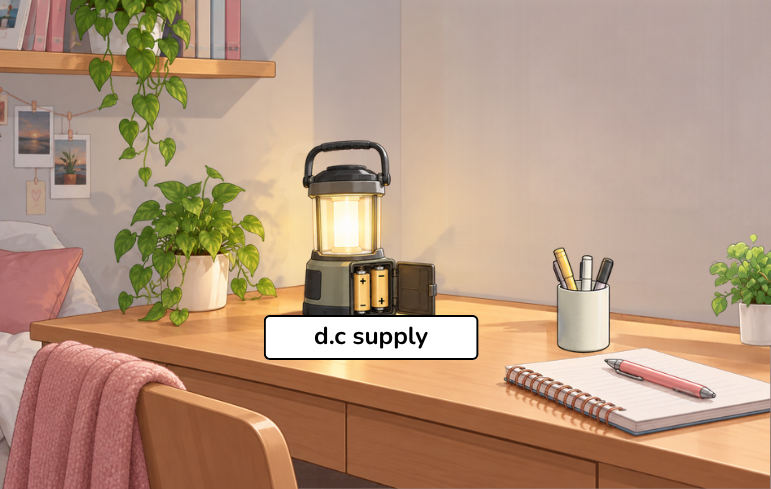
Cells provide direct current, in which charge moves in one overall direction. The UK mains supply is alternating current, so the current repeatedly reverses direction.
What is the difference between a.c. and d.c.?
Compare the graph with the movement of electrons in the wire. Watch what happens to the direction of electron flow.
Alternating potential difference
Watch the electrons in the metal wire
Constant direct potential difference
Watch the electrons in the metal wire
Alternating current
Charge repeatedly changes direction.
Direct current
Charge moves in one overall direction.
Alternating-current supply facts
- Potential difference: about 230 V for UK mains
- Frequency: 50 Hz
- Type: a.c.
Direct-current supply facts
- Potential difference: depends on the cell or battery
- Frequency: 0 Hz — it does not alternate
- Type: d.c.
- typical AA cell supplies approximately 1.5 V d.c.
☆ Safety note
Mains electricity can cause fatal injury. Never open or alter connected electrical equipment.
WIRE THE PLUG CORRECTLY
Each wire has a different job
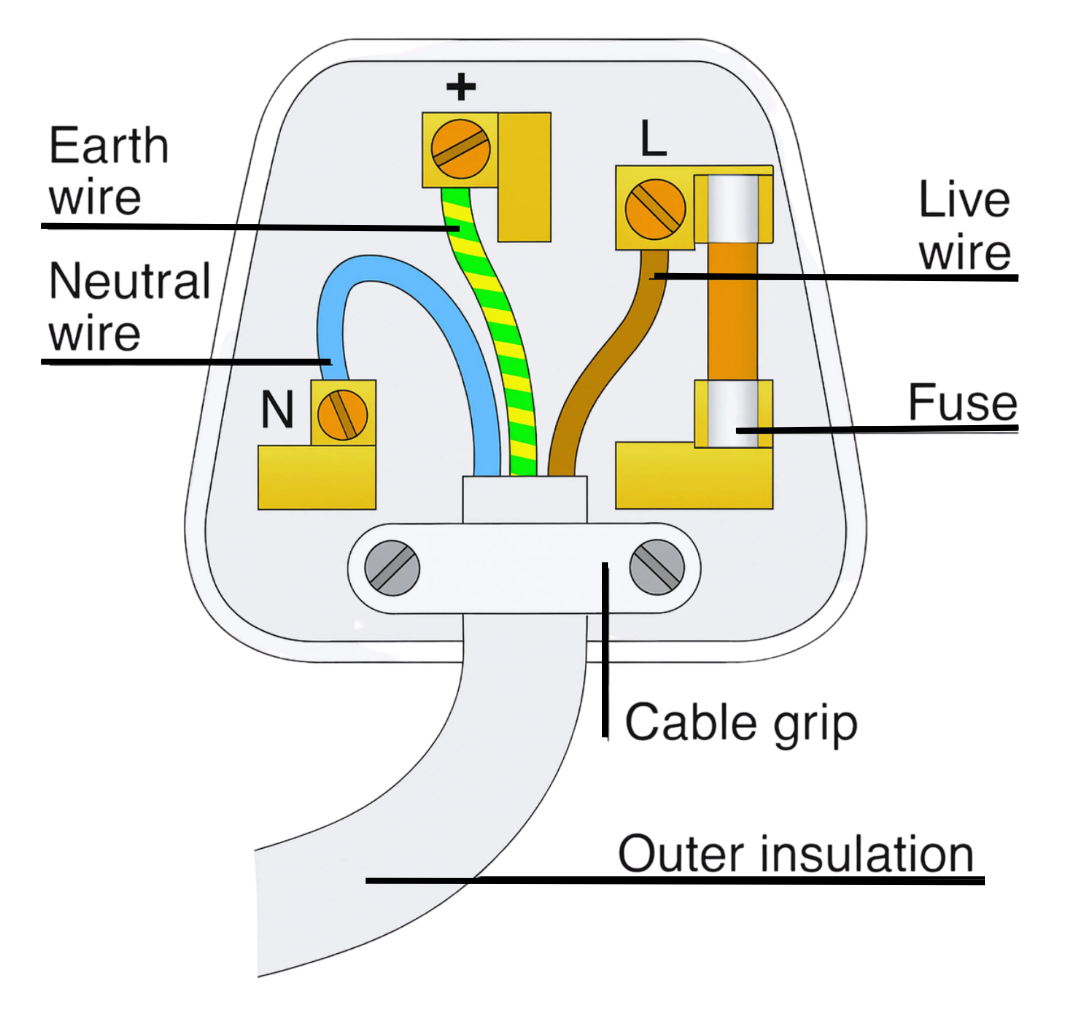
Live wire
brown · L
Carries the alternating current from the supply. It is at an alternating potential difference of about 230 V relative to earth and can be dangerous.
Neutral wire
blue · N
Completes the circuit. It is at or close to earth potential: approximately 0 V.
Earth wire
green/yellow · E
A safety wire connected to the metal case of an appliance. It normally carries no current and is at approximately 0 V.
The live wire can still be dangerous when a switch is open. A switch should be placed in the live wire, but wiring on the supply side of the switch may remain live.
Can you identify the plug wires?
A UK plug contains three wires. Each wire has a different job and connects to a particular terminal inside the plug.
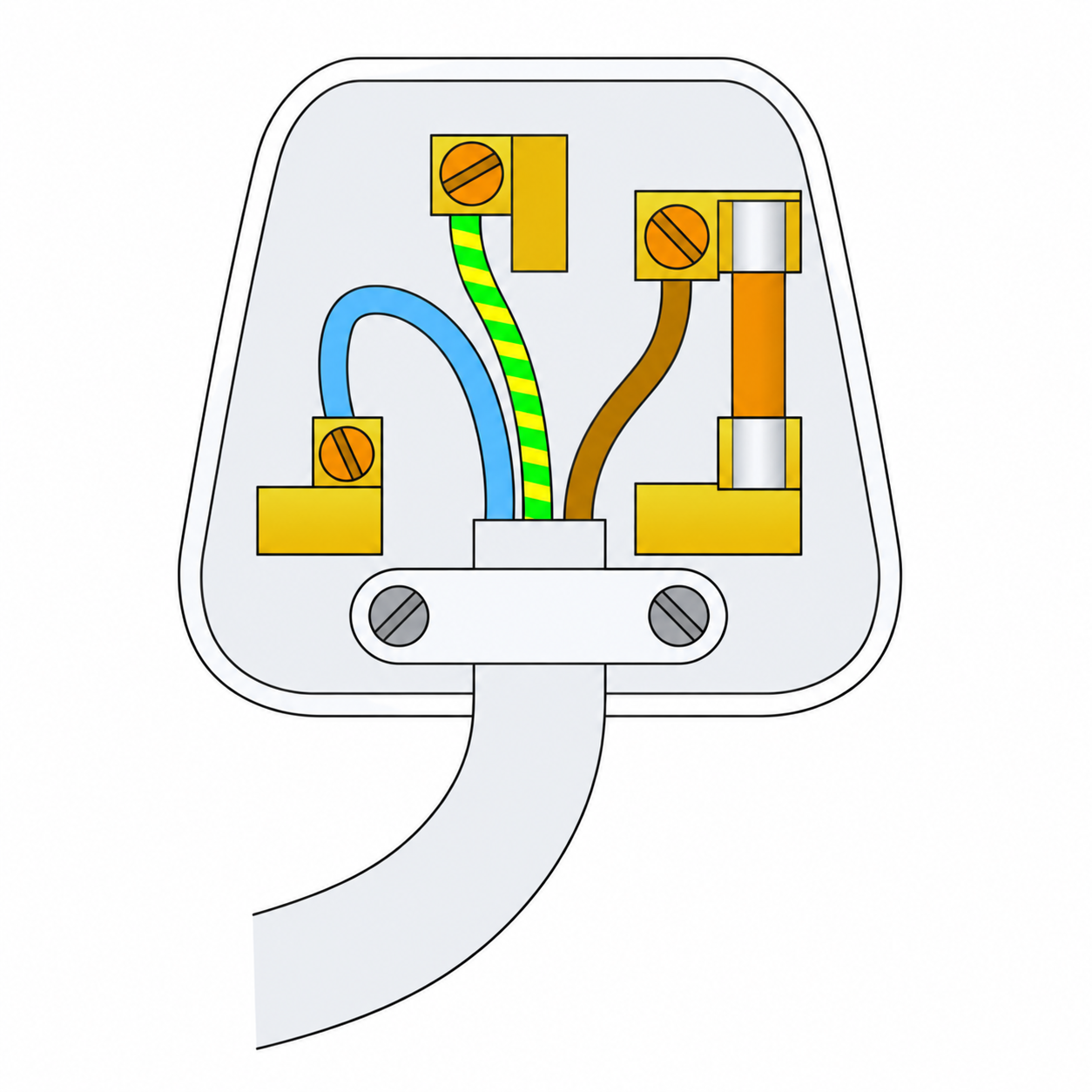
Which wire is shown in position A?
Which wire is shown in position B?
Which wire is shown in position C?
The importance of the Earth wire
The earth wire protects people by providing a low-resistance path for fault current. The resulting large current causes a fuse to melt or a circuit breaker to trip, disconnecting the appliance from the live supply.
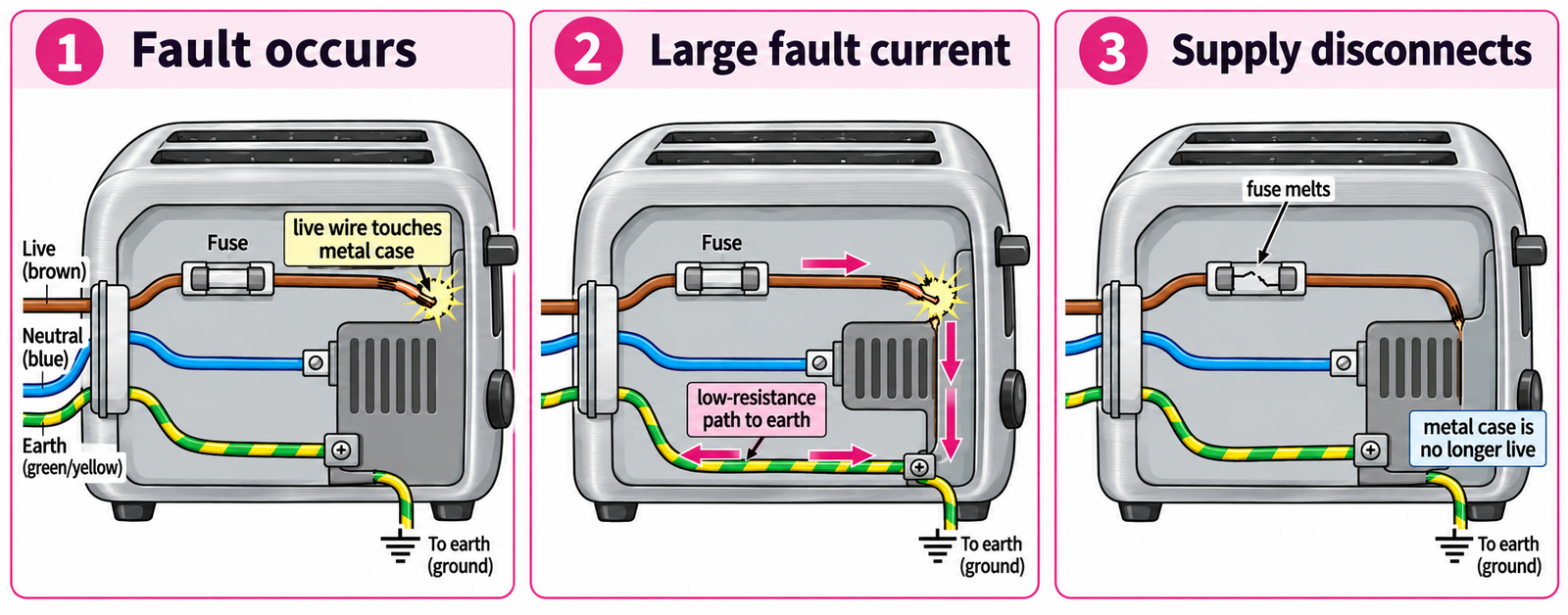
1. A fault causes the live wire to touch the metal case.
2. The earth wire provides a low-resistance path, so a large fault current flows.
3. The large current causes the fuse to melt or the circuit breaker to trip, disconnecting the appliance from the live supply.
☆ The earth wire does not “absorb” electricity. It provides a low-resistance route for fault current so a protective device disconnects the supply quickly.
Fuses
A fuse melts if the current is too large
The fuse is placed in the live wire. Its thin wire heats and melts when the current exceeds its rating, opening the circuit and disconnecting the appliance.
Choosing a fuse
Calculate the normal operating current using:
I = P ÷ V
Then choose the smallest available fuse rating just above it.
Choose the correct fuse
Which plug fuse should be fitted?
Which plug fuse should be fitted?
Which plug fuse should be fitted?
Which plug fuse should be fitted?
Other safety devices
Different devices detect different dangers
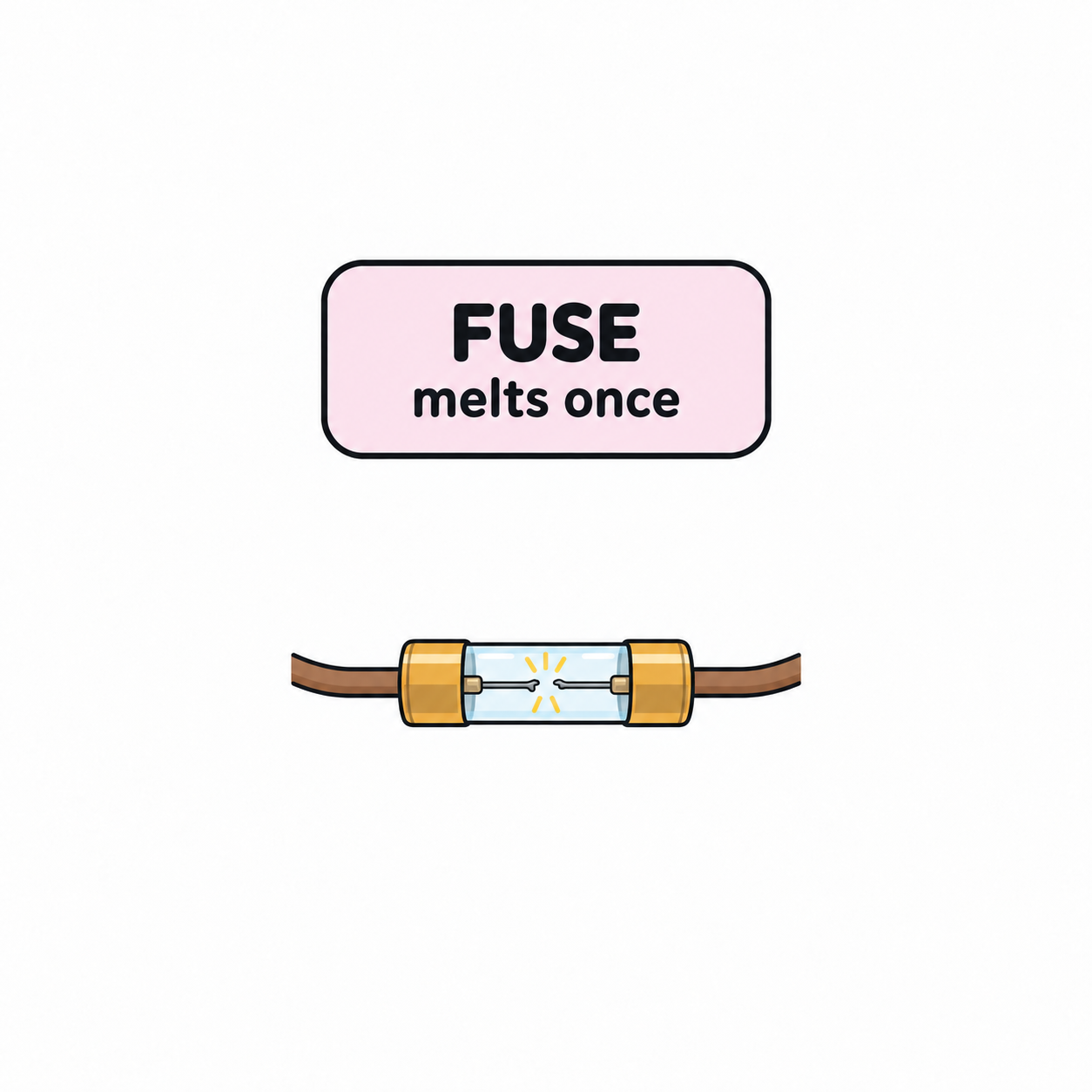
Fuse — melts once
Breaks the live circuit if the current becomes too large. It must be replaced after operating.
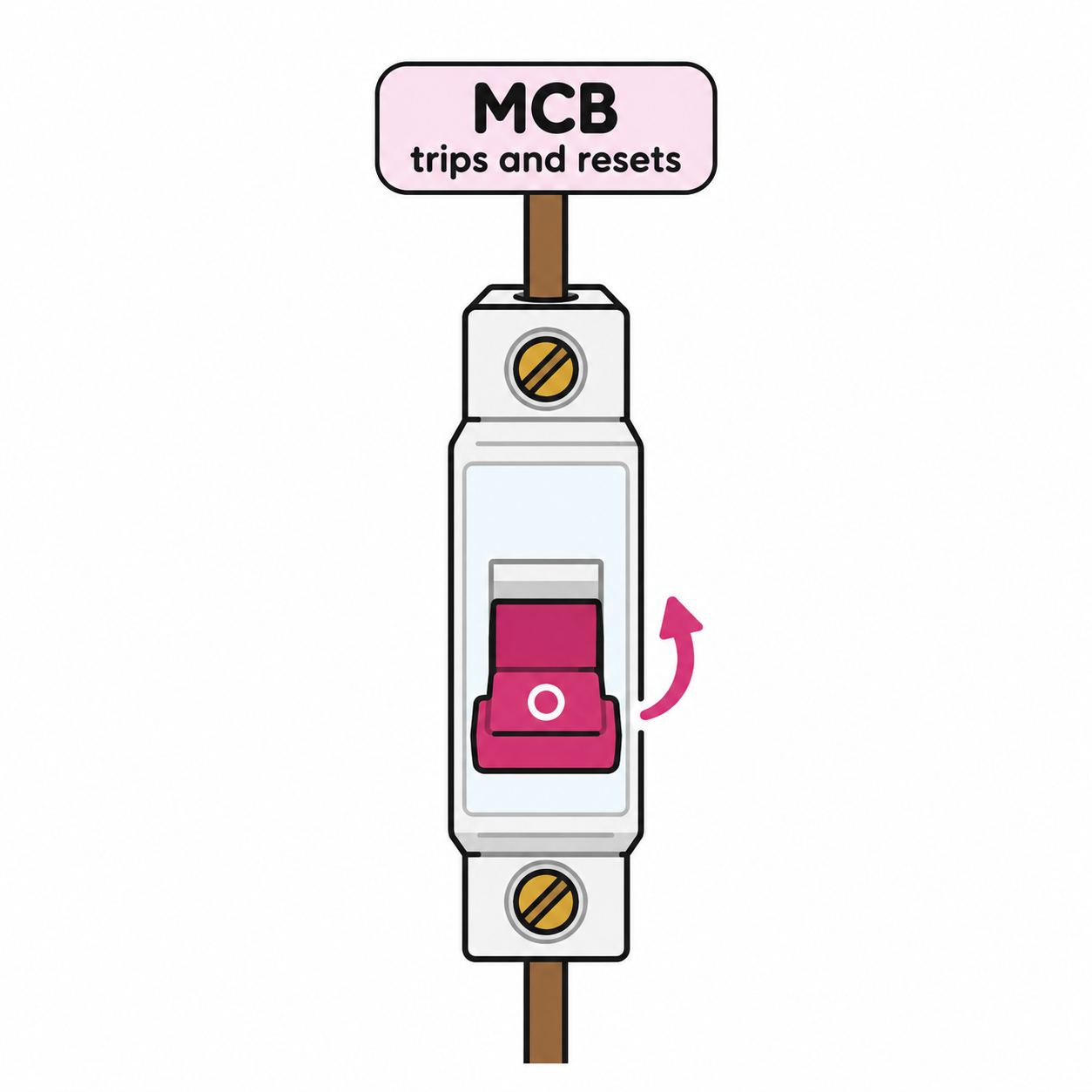
MCB — trips and resets
A miniature circuit breaker rapidly switches off a circuit when the current becomes too large.
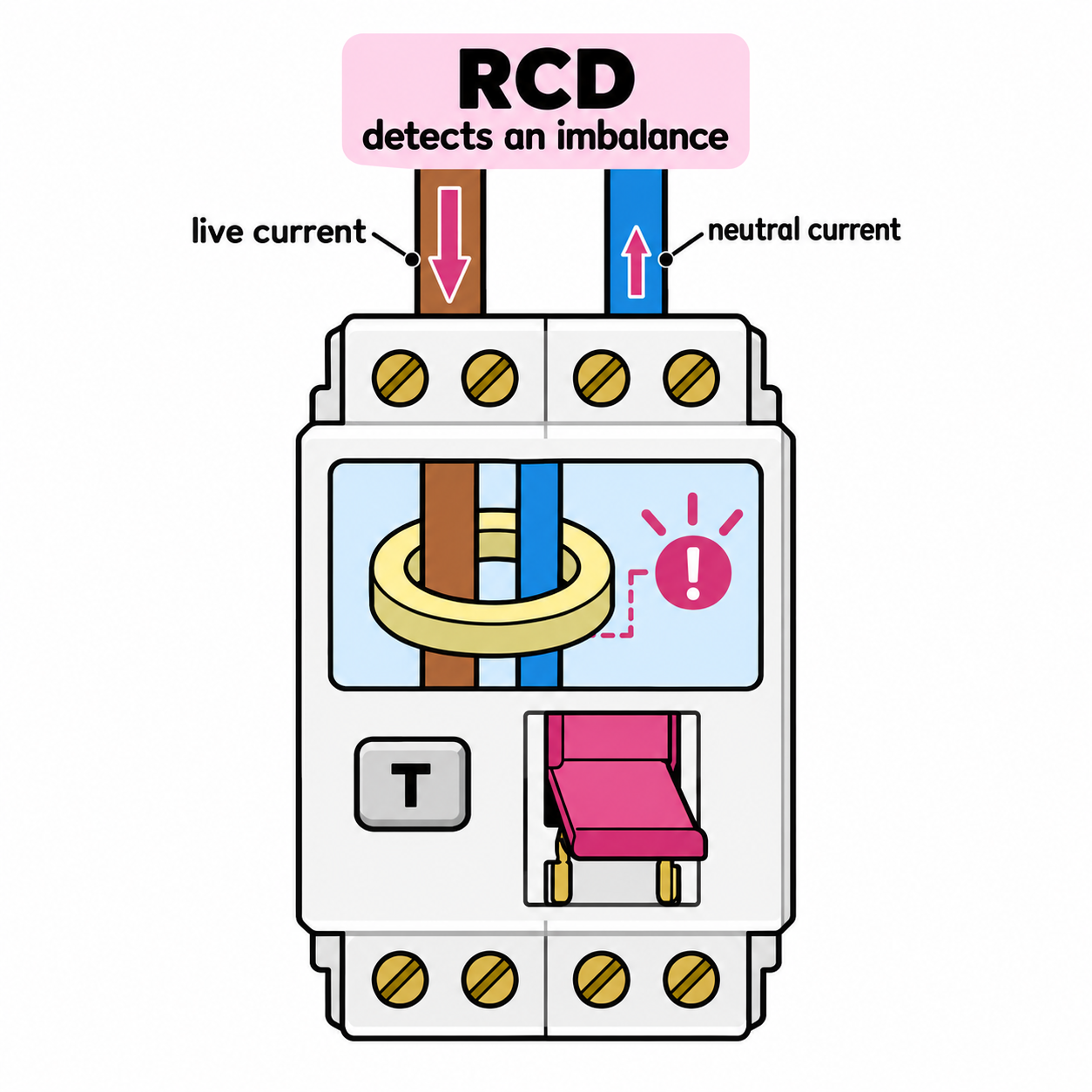
RCD — detects current imbalance
Compares currents in live and neutral. A difference suggests current is leaking, so it disconnects the supply rapidly.

Double insulation
Some appliances do not need an earth wire
An appliance with a plastic case and two layers of insulation between live parts and the user can be double insulated. It carries the square-within-a-square symbol and does not require an earth wire.
Check your understanding
Answer all three questions about electrical safety.
Why could a fuse in the neutral wire leave an appliance dangerous?
If it melted, current would stop, but the appliance could remain connected to the live supply. A fuse in the live wire disconnects the dangerous live connection.
CHAPTER 13
Chapter summary
- UK mains electricity is an alternating potential difference of approximately 230 V with a frequency of 50 Hz.
- In a three-core cable, the brown wire is live, the blue wire is neutral and the green/yellow wire is earth.
- The live and neutral wires normally carry current. The earth wire is a safety wire and normally carries no current.
- Earthing provides a low-resistance path for current if a fault makes a metal case live. A large fault current can then cause a protective device to disconnect the supply.
- Fuses and circuit breakers protect against excessive current, while an RCD detects a difference between the currents in the live and neutral wires and rapidly disconnects the supply.